Global manufacturers continue to face rising demands for machining consistency, tighter dimensional tolerances, and longer production cycles. As purchasing teams and production engineers look for practical ways to improve efficiency without compromising quality, Cemented Carbide Cutting Tools have become a frequent topic of discussion across industrial forums and procurement channels. At the same time, interest in Carbide Flats is also increasing because they provide a versatile starting material for custom tooling, wear components, and precision-machined parts. Instead of focusing only on cutting speed, many buyers now evaluate material stability, processing flexibility, and long-term manufacturing value before selecting a supplier.
Why Material Quality Matters More Than Cutting Speed
Many machining challenges begin with the material itself rather than the cutting parameters. A carbide tool produced from carefully controlled raw materials is generally more capable of maintaining dimensional stability throughout extended machining operations.
Procurement professionals increasingly ask questions such as:
- How consistent is each production batch?
- Can the material support high-precision grinding?
- Does the carbide grade match different workpiece materials?
- How stable is performance during continuous production?
These questions reflect a broader purchasing trend. Buyers are no longer comparing products solely by specifications on paper; they also consider manufacturing consistency, traceability, and long-term supply reliability.
The Growing Role of Carbide Flats in Custom Manufacturing
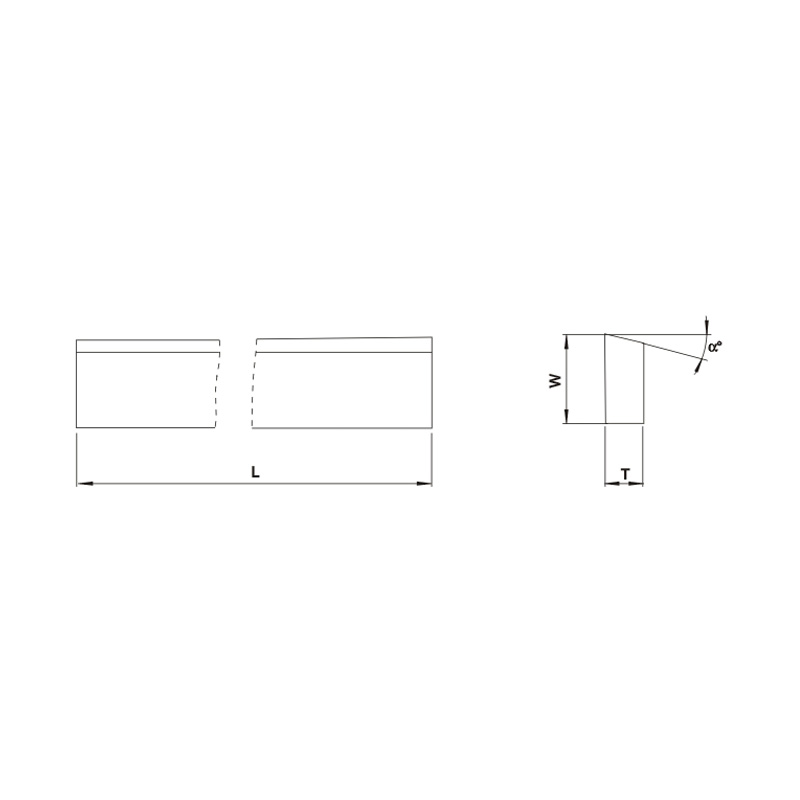
Standard cutting tools do not always satisfy specialized machining requirements. Many equipment manufacturers therefore purchase Carbide Flats to produce customized inserts, wear strips, punches, gauges, knives, or other precision components.
Compared with finished products, carbide flat stock offers greater flexibility during design and production. Engineers can machine the material into application-specific geometries while selecting suitable dimensions and carbide grades according to actual working conditions.
This approach allows manufacturers to shorten development cycles when new tooling concepts are required without redesigning the entire production process.
Selecting the Right Carbide Grade for Different Applications
Choosing an appropriate carbide grade is often more valuable than simply selecting the hardest available material.
Several factors should be evaluated before purchasing:
- Workpiece material, including steel, stainless steel, cast iron, or non-ferrous alloys
- Expected cutting speed and feed rate
- Continuous or interrupted cutting conditions
- Surface finish requirements
- Tool life expectations and maintenance schedules
Balancing these factors helps manufacturers achieve predictable machining performance while reducing unnecessary tool replacement and production interruptions.
Manufacturing Consistency Has Become a Purchasing Priority
Industrial buyers increasingly pay attention to how carbide products are manufactured rather than only reviewing technical specifications.
As a manufacturer, we understand that stable quality begins with controlled production processes. Material selection, powder preparation, pressing, sintering, grinding, and dimensional inspection all influence the final performance of carbide products. Careful process management helps maintain consistency across production batches, making it easier for customers to standardize machining operations and simplify inventory planning.
For buyers managing long-term projects, dependable manufacturing capability often becomes just as important as product specifications.
Practical Questions Buyers Frequently Raise Before Ordering
Discussions with international customers often revolve around practical production concerns instead of marketing claims.
Common questions include:
- Can customized dimensions be supplied?
- Are different carbide grades available for various machining conditions?
- Is dimensional tolerance controlled throughout production?
- Can samples support qualification testing before larger purchases?
- Is technical communication available during product selection?
Addressing these questions early helps purchasing teams reduce sourcing uncertainty while giving engineers greater confidence during product evaluation.
Building Long-Term Value Through Technical Collaboration
Successful tooling projects rarely depend on a single product. They develop through ongoing communication between manufacturers and customers.
Sharing machining conditions, workpiece materials, equipment information, and production objectives enables more suitable material recommendations and manufacturing solutions. Continuous technical support also allows future product improvements as customer applications evolve.
This collaborative approach is becoming increasingly valuable for companies seeking dependable supply partners rather than one-time transactions.
Industrial manufacturing continues to evolve toward higher precision, greater production stability, and more efficient resource utilization. These trends are encouraging buyers to evaluate materials from a broader operational perspective instead of focusing solely on initial purchase cost. Whether the requirement involves finished Cemented Carbide Cutting Tools or precision Carbide Flats for customized applications, selecting a manufacturer with consistent production capability, flexible customization options, and technical manufacturing experience can help support stable machining performance and long-term production planning across a wide range of industrial applications.

 English
 中文简体
中文简体 русский

Contact Us