Pursuing Consistency in Industrial Output
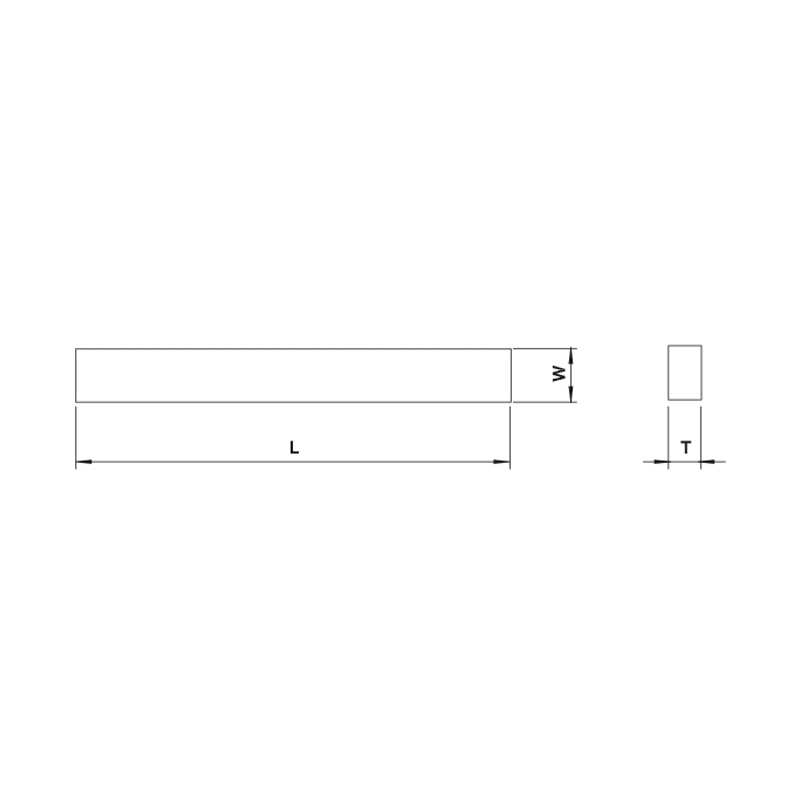
In many industrial processes, the final quality of a product is deeply connected to the stability and condition of the machinery that produces it. Vibration, thermal drift, and gradual wear of machine components can introduce variations that affect dimensional accuracy and surface finish. To address these sources of inconsistency, engineers are integrating materials with specific mechanical properties into equipment design. Carbide Flats are being used in this capacity, serving as structural elements or wear surfaces that contribute to smoother operation and more consistent product quality over time.
Enhancing Dynamic Machine Stability
Machinery in motion, especially at operational speeds or under load, can exhibit subtle vibrations or chatter. These dynamics, often transferred to the workpiece or tool, can leave visible patterns on a surface or cause dimensional deviations. Components made from Carbide Flats possess a high degree of stiffness and a favorable damping capacity. When used for elements like spindle liners, tool holder blocks, or support ways, they can help absorb vibrational energy and reduce resonant amplitudes. This damping effect contributes to a calmer machining environment, which is often a prerequisite for achieving fine surface finishes and holding close tolerances.
Protecting Surface Quality Through Wear Resistance
Perhaps the more direct application of Carbide Flats in quality assurance is as a wear surface that contacts the product. In processes like rolling, slitting, calendaring, or continuous printing, the product must slide or be guided by machine surfaces. If these guide surfaces wear, they can develop grooves, scratches, or become uneven. This wear can then impart defects onto the product passing over them. By fabricating these critical guides, rolls, or beds from Carbide Flats, the surface in contact with the product remains smooth and consistent for much longer. This is particularly important when processing delicate materials like optical films, polished metals, or coated papers, where even a minor scratch can render the product unsuitable.
Illustrative Applications in Industry
Practical examples show how this principle is applied. In a precision slitting line for flexible materials, the scoring or shear blades often run against a hardened anvil or backup roll. Using a segment of Carbide Flats for this anvil surface resists notching from the blades, ensuring a clean cut across the entire web width throughout a production run. In a different context, a feed table on a laser cutting system that uses Carbide Flats for its surface will not develop grooves from repeated part loading, ensuring that every sheet lies perfectly flat for consistent laser focus and cut quality.
Considerations for Integration and Design
Successfully incorporating Carbide Flats into a machine design to improve stability and quality requires attention to detail. The method of mounting must secure the carbide component firmly to prevent any micro-movement. Designers must also account for differences in thermal expansion between the carbide and surrounding machine structures to avoid stress under operating temperatures. Furthermore, the surface finish of the Carbide Flats itself is a factor; for product-contact applications, it may be polished to a specific smoothness to minimize friction and adhesion.
A Strategic Element for Process Reliability
The use of Carbide Flats to enhance stability and surface quality represents a targeted approach to machine design and maintenance. It moves beyond simply replacing worn parts to proactively selecting materials that resist the forces that cause wear and instability in the one place. For process engineers and machine builders, this means viewing certain components not just as structural pieces, but as active contributors to the quality of the manufacturing process. By integrating materials with inherent stability and durability at key points, they can build a foundation for more predictable and consistent industrial output.

 English
 中文简体
中文简体 русский

Contact Us