A carbide rod arrives as a cylindrical sintered blank, but its journey to becoming a critical industrial part involves specialized manufacturing pathways. The processes applied differ significantly depending on whether the final product is a cutting tool or a wear component. This article outlines these two distinct journeys, highlighting the key manufacturing stages that transform a standard carbide rod into a finished, operational part.
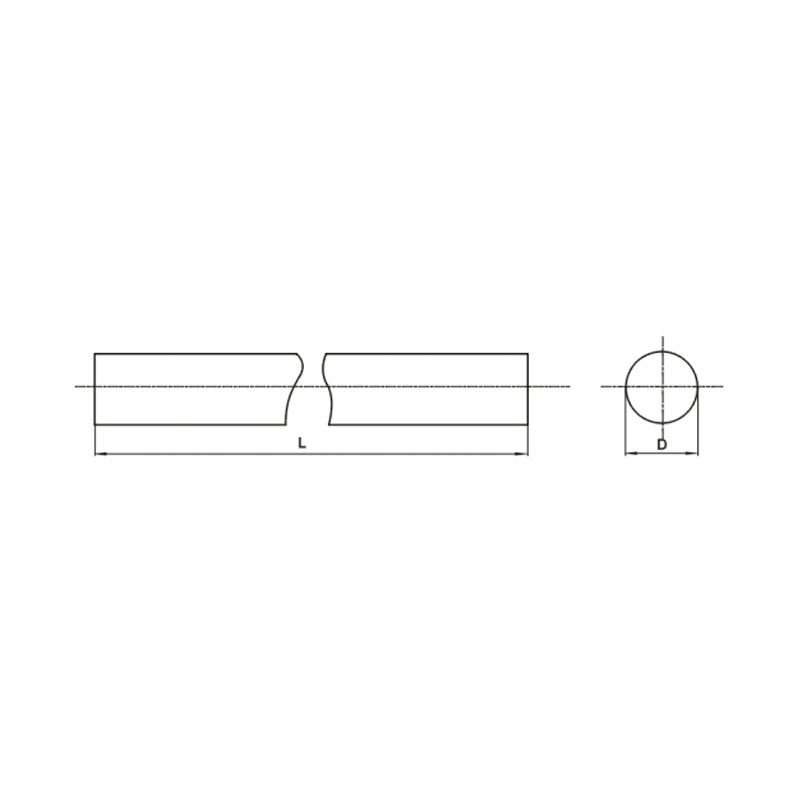
Pathway One: Fabrication of Solid Carbide Cutting Tools
The creation of tools like end mills, drills, and routers from carbide rods requires precision shaping of the hard material.
- Initial Cutting: The process often begins with cutting the rod to a specific length using a method like wire Electrical Discharge Machining (EDM) or a diamond grinding wheel. This ensures a clean, stress-free cut.
- Precision Grinding: This is the core stage. Computer Numerical Control (CNC) tool and cutter grinders use diamond grinding wheels to generate the tool's geometry. This includes creating complex helical flutes, grinding the primary and secondary relief angles on the cutting edges, and forming the tool's profile (e.g., ball nose, corner radius). Coolant is used to manage heat and ensure dimensional accuracy.
- Finishing Processes: After grinding, tools may undergo processes like edge honing (a light pass to create a small, controlled radius on the cutting edge) or vibratory finishing to smooth surfaces. The final step is often the application of a thin-film coating (like TiN, TiAlN) via Physical Vapor Deposition (PVD) to enhance surface properties.
Pathway Two: Production of Wear-Resistant Components
When manufacturing parts like nozzles, guides, or dies, the focus is on achieving precise dimensions and specific surface characteristics for non-cutting applications.
- Forming the Shape: The required shape is achieved through machining processes suitable for hard materials. Wire EDM is frequently used for intricate 2D profiles, while sinking EDM can create complex 3D cavities. For simpler shapes, grinding with diamond wheels on specialized machines is the method.
- Achieving Dimensional and Surface Finish Requirements: Components often require very tight tolerances and a specific surface roughness. This is accomplished through precision grinding operations. The part may be ground on cylindrical, surface, or internal grinders with diamond abrasives. For applications needing very smooth surfaces, such as sealing faces, a polishing stage with diamond compounds follows grinding.
- Inspection and Integration: Finished carbide components are meticulously inspected for dimensions, geometry, and surface finish. They are then ready for assembly, which may involve press-fitting into steel housings or securing with fasteners to create a complete tool or assembly.
Shared Manufacturing Challenges and Considerations
Both pathways face common challenges due to the hardness of the carbide rod material.
- Process Selection: Conventional machining with metal-cutting tools is ineffective. Manufacturing relies on processes that use harder abrasives (diamond) or non-contact thermal methods (EDM).
- Managing Stress and Defects: The grinding and EDM processes must be carefully controlled to prevent introducing micro-cracks or excessive thermal stress into the surface of the part, which could affect its service life.
- Process Efficiency and Cost: Machining carbide is inherently slower than machining steel. The cost of diamond tooling and EDM consumables, along with the time required, is factored into the production of finished components. Efficient process planning is important.
The Importance of the Starting Material
The quality and consistency of the initial carbide rod significantly influence the manufacturing process and the final part. Rods with uniform density, consistent grain structure, and good straightness simplify subsequent machining, improve yield, and contribute to the reliability of the finished component. Variations in the raw material can advanced to challenges in grinding, unexpected tool wear during EDM, or inconsistencies in the final parts.
The journey of a carbide rod from a standardized blank to a finished part is defined by specialized, abrasive-based, or thermal machining processes. The path diverges based on the part's function—whether it is designed to cut or to withstand wear. Success in these manufacturing pathways depends on appropriate process selection, careful control of machining parameters, and beginning with a carbide rod that provides a stable and consistent foundation. This transformation process unlocks the functional potential contained within the rod, delivering components that meet the precise demands of industrial applications.

 English
 中文简体
中文简体 русский

Contact Us