Carbide Burr tools are widely used in metal fabrication, precision machining, mold maintenance, and automotive component production. However, inconsistent surface finishes, rapid tool wear, and excessive heat can increase processing time and unnecessary rework. For manufacturers and industrial buyers, the challenge is not simply finding a suitable rotary burr, but matching its cutting geometry and material specifications to the actual application. Understanding these factors helps improve deburring efficiency while maintaining the quality of finished components.
Identify the Main Causes of Premature Tool Wear
Rapid tool wear does not always indicate poor product quality. Incorrect operating speed, excessive feed pressure, unsuitable cutting geometry, and unstable machine setups can all shorten tool life. When a burr begins to cut less efficiently, operators may apply more pressure, creating additional heat and accelerating wear.
A more effective approach is to inspect the cutting edges, confirm the workpiece material, and review the operating conditions before replacing the tool. For production teams, identifying the underlying cause can reduce repeated tool changes and improve process consistency.
Select a Cut Type That Matches the Material
Different metals require different cutting characteristics. A double-cut carbide burr is commonly used for general-purpose work on steel and cast iron because its intersecting cutting edges support controlled material removal. Single-cut designs can be appropriate for certain applications requiring smoother cutting action and efficient chip evacuation.
Aluminum presents a different challenge because its softer material can accumulate on the cutting edges. An aluminum-cut burr with suitable flute geometry may help reduce clogging and maintain cutting performance.
Before selecting a product, buyers should consider:
- Workpiece material and hardness.
- Required stock removal and surface finish.
- Whether the operation involves rough shaping or fine finishing.
- Machine speed, tool diameter, and available working space.
These details help narrow the selection to a practical solution rather than relying on a general-purpose tool for every job.
Match Burr Head Geometry to Component Design
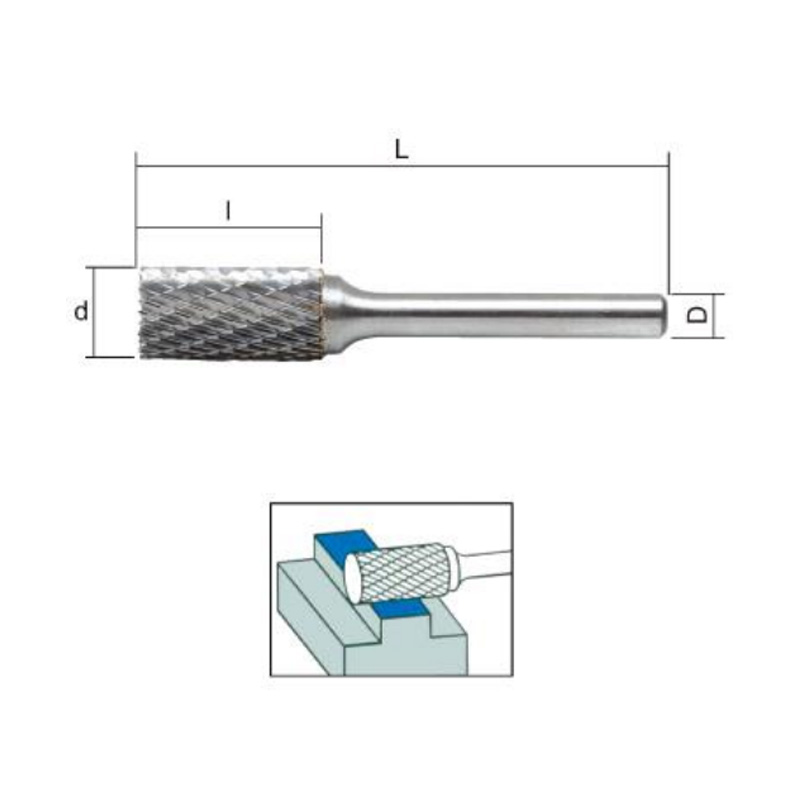
The shape of the cutting head directly affects accessibility and material removal. Cylindrical burrs are useful for straight edges and relatively flat surfaces, while ball-shaped designs support contouring and work on curved cavities. Tree-shaped and flame-shaped burrs can reach angled transitions, grooves, and other restricted areas.
For mold makers and precision component manufacturers, choosing the correct geometry helps operators work around detailed features without unnecessarily altering adjacent surfaces. It is also important to select a head diameter that provides sufficient clearance for the target area.
Improve Cutting Stability Through Proper Operation
Even a high-quality tungsten carbide rotary burr can produce poor results if the setup is unstable. Excessive pressure may cause vibration, overheating, and uneven finishing. Holding the cutting head in one position for too long can also create localized damage.
Operators should follow the recommended speed range for the specific burr diameter and machine, maintain steady movement, and secure the workpiece properly. The collet must match the shank diameter, and the tool should be inspected for damage before use. Appropriate eye protection and other task-specific safety measures are essential during operation.
Assess Manufacturing Quality Before Bulk Purchasing
For distributors, procurement teams, and industrial users, product consistency is as important as initial cutting performance. Variations in head dimensions, concentricity, cutting-edge formation, and shank quality may affect machining stability and the finished surface.
When evaluating a carbide burr supplier, request clear dimensional specifications and information about quality inspection procedures. Sample testing under representative working conditions can help verify compatibility before a larger order is placed. Buyers should also confirm available head shapes, cut types, shank sizes, packaging requirements, and customization options.
Reduce Rework with a More Structured Selection Process
Improving deburring performance requires coordination between tool selection, machine settings, and inspection practices. Recording successful parameters for recurring jobs can help operators reproduce results and identify changes in performance earlier. Regular inspection also helps determine when a tool should be cleaned, resharpened if applicable, or replaced.
As a manufacturer, we recognize that reliable tooling starts with understanding the customer's production requirements. By matching geometry, cutting style, and dimensions to the intended application, buyers can make better purchasing decisions and establish more consistent finishing processes. The right Carbide Burr can support cleaner edges, controlled material removal, and dependable results across a wide range of metalworking operations.

 English
 中文简体
中文简体 русский

Contact Us